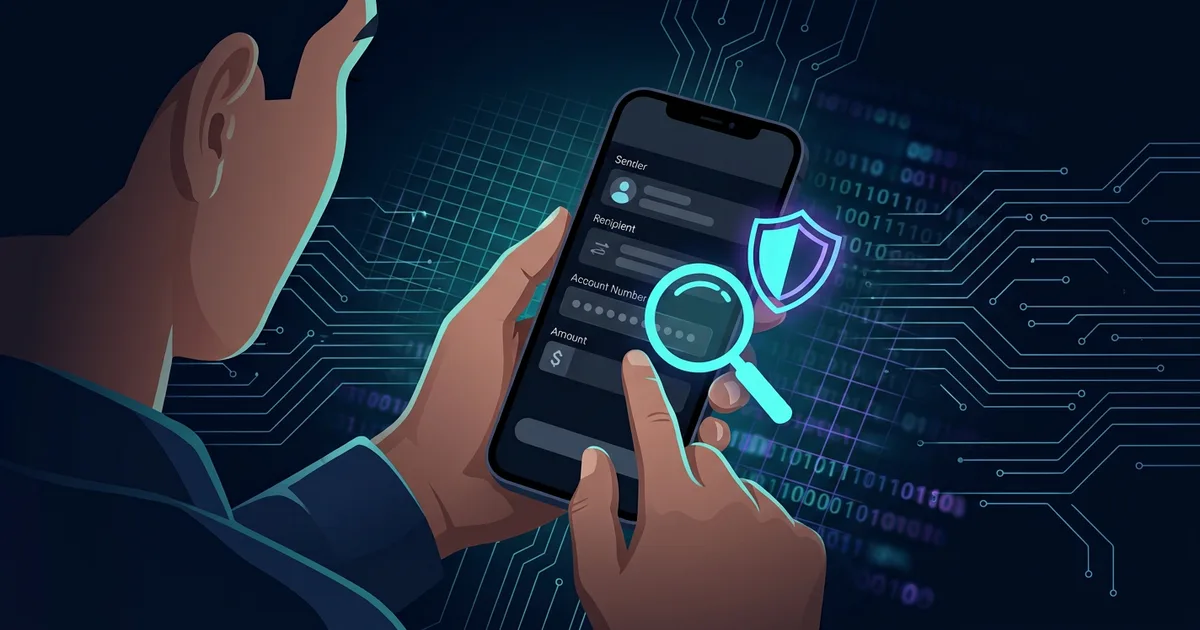
Transfers often occur when someone is in a hurry: there is only one item in stock, administration fees must be paid now, or the prospective seller is pressuring the buyer to immediately send money. Fraudsters deliberately use situations like this because simple checks are often missed when the victim feels they have to act within a few minutes.
Checking account numbers before transfers is a good habit, but one search result cannot prove that the recipient is safe. New accounts may have never been reported. Clean accounts in one database can also be used together in fraud schemes. Therefore, use account checking as one layer of identity, store, offer, and payment verification.
The goal of this guide is to help you slow down your transfer decisions in a practical way. This article does not label anyone as a fraudster and does not replace a bank or regulatory investigation. The focus is on evidence, official channels, and actions you can take yourself.
Initial steps before checking
Check before the money moves. Once a transfer lands in the recipient's account, getting it back depends on their cooperation and the bank's process, and often takes weeks with no guarantee.
Have the account number, holder name, and bank name exactly as the seller gave them. A small mismatch in the holder name is reason enough to pause the payment.
How to check safely
1. Start from the official examination portal
Use CekRekening.id or the relevant official channel to search for the destination account number or digital wallet number. Type the portal address yourself. Do not submit login data, PIN, or OTP code to the inspection site.
2. Match the transaction name and context
Compare the recipient's name on the transfer screen with the name of the shop, seller, or party claiming to receive the payment. Name differences are not always fraudulent, but require an explanation that can be verified before funds are sent.
3. Check the offer trail
Search for shop name, contact number, product photo and account number with a search engine. Check whether the review appears genuine, whether the account was newly created, and whether the photos are from another seller. Don't rely on a single testimonial screenshot.
4. Use the platform's payment path
For marketplace shopping, use the checkout and transaction protection provided by the platform. Sellers who insist on direct transfers via chat move you out of the way of records and available dispute resolution.
5. Read the inspection results correctly
Reports in the database are risk signals, not legal decisions. If the account is ever reported, do not transfer and keep the proceeds. If there is no report, continue with another verification because the account could be new or has never been reported.
6. Resist time pressure
Prices that are only valid for a few minutes, threats of orders being cancelled, and requests for additional fees are common patterns used to bypass the verification process. Legitimate sellers can explain the product without forcing you to go through an inspection.
7. Save proof before paying
Save product links, seller profiles, conversations, recipient names, prices and shipping conditions. This proof is helpful if the item is not delivered or the information changes after the transfer.
8. Act quickly if you have transferred
Contact the bank or digital wallet provider via official channels, report the transaction, and prepare evidence. Do not send additional funds for cancellation fees. Report the perpetrator's number and account via the appropriate channels.
Example situations
Raka found a used camera at a price far below market price. The seller requested a full transfer via chat and said there was another buyer waiting. Raka checked the account number, but couldn't find the report. He then saw that a new seller account was created, product photos appeared in other stores, and the account name did not match the profile name. He canceled the transaction. The decision was born from a combination of evidence, not from a single examination result.
Mistakes to avoid
Do not read a clean record in a reporting database as proof the seller is trustworthy. A new account has not been reported yet. Do not rush because the seller says one item is left or the price rises within the hour either. Time pressure is a tool of the trade, not a coincidence.
Short checklist
- I open the official site or application myself.
- I store necessary evidence without releasing sensitive data.
- I do not share PINs, passwords, OTPs or recovery codes.
- I check important accounts from trusted devices.
- I use more than one piece of evidence before making a decision.
- I contact the service provider through official channels if there is a financial or account risk.
- I updated the device and removed unnecessary access.
- I know when to ask for help from trusted people or parties.
Frequently asked questions
Are accounts that don't appear on CekRekening.id definitely safe?
No. A no report result simply means the number was not found in the available report data. Keep identity, offer, transaction path and pressure signatures in line.
Can I share an account number that I suspect?
Don't make public accusations without proof and proper procedures. Save the evidence and then use official reporting channels, banks, platforms or authorized personnel.
What to do after an incorrect transfer?
Immediately contact the payment provider via official channels, save evidence, and follow the reporting procedures. Speed helps with tracking, but does not guarantee funds can be recovered.
Is checking digital wallet numbers also important?
Yes. Treat digital wallet numbers like accounts. Match the purpose of the transaction and do not scan the QR or follow instructions that convert receipt of money into payment.
Helpful follow-up checks
If the transfer already went out, this order decides your chance of recovery.
- Contact your bank within hours. The sooner the report lands, the better the odds the funds are still sitting in the recipient account.
- Report through official channels. National fraud-reporting services record problem accounts so the next person can check before paying.
- Keep complete evidence. Transfer receipts, the conversation, and screenshots of the advertisement are what the bank and police ask for.
Sources and further reading
Editorial note: This article is educational in nature. Service procedures, device menus, and platform policies are subject to change. Use official channels for handling specific cases.