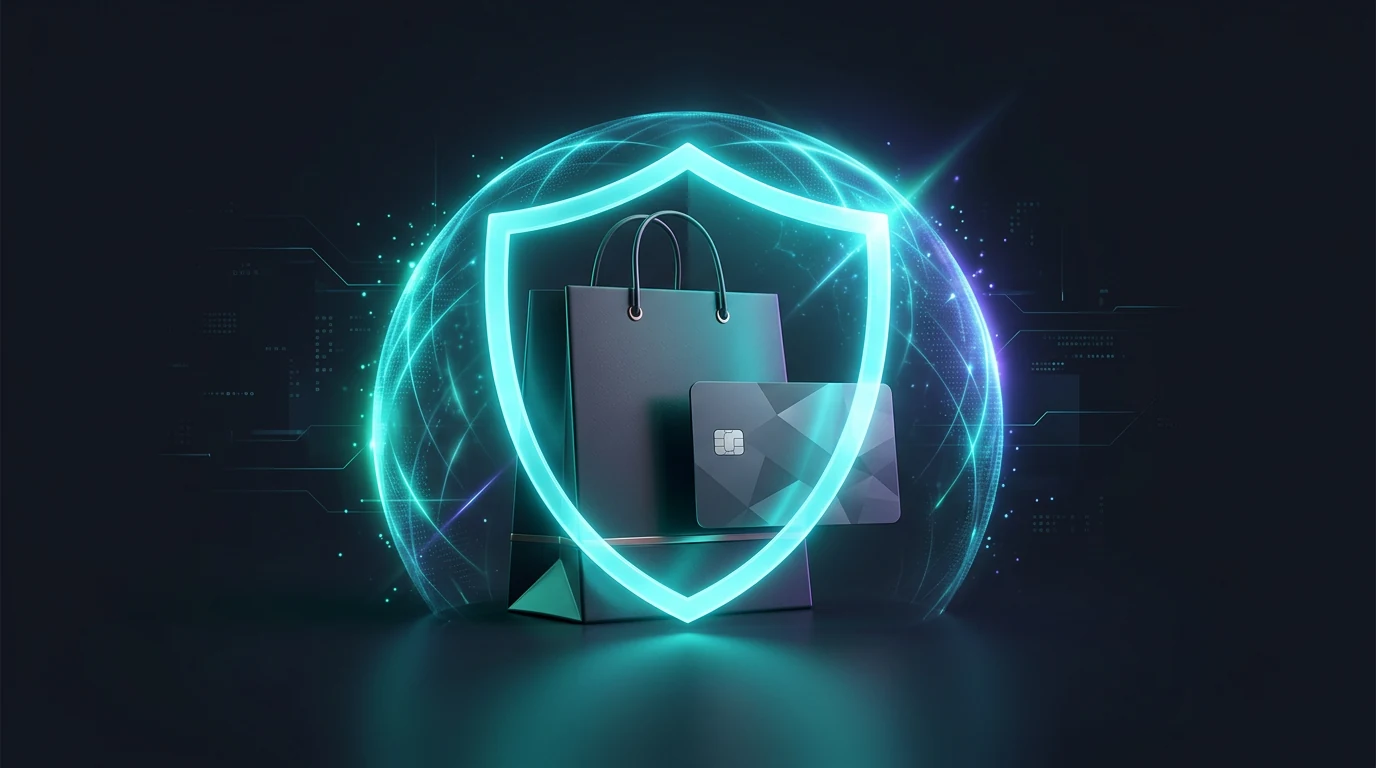
Online shopping makes it easy to compare prices, read reviews, and receive products without visiting a store. The same speed is useful to scammers: ads can lead to fake shops, seller accounts can use real product photos, and conversations can be moved outside a platform so buyer protection disappears. Safe shopping does not mean never buying. It means checking the seller and payment route before fear of missing out controls the decision.
A polished shop is not proof that a seller is trustworthy
An https address, professional design, or familiar logo is not proof that a shop is legitimate. Encryption protects the browser connection, not the seller's character. A stronger decision combines several factors: business identity, contact method, return policy, reputation from another source, reasonable pricing, and a payment method with a support or dispute path. Scammers often try to move a transaction from a recorded route into private chat. They may offer an extra discount, claim that a marketplace system is unavailable, or demand a payment method that is difficult to reverse. Such a request does not prove fraud on its own, but it removes layers that normally help a buyer when a product never arrives or differs from its description. Start with "research seller identity before checkout" and use a route you can open yourself.
Separate product research from the payment decision
Start with "research seller identity before checkout", then move to "compare price with market conditions" once that foundation is solid.
1. Research seller identity before checkout
Look for an address, business name, contact method, delivery and return policy. Check whether information is consistent across other pages or independent sources. Reviews are useful when their pattern is read, not only their star count. Very uniform comments or ones that never discuss the product deserve more checking.
2. Compare price with market conditions
A discount is not always a scam, but a price far below every other seller needs a reasonable explanation. Do not let a countdown, "one left" notice, or private message force a choice. Leave the product in a cart and return after you have checked. The goal is not added complexity. A realistic habit lasts longer.
3. Choose a payment route with clear protection
Understand the platform, bank, or card issuer's policy for unauthorized transactions and purchase disputes. Avoid sellers who only accept a route without assistance, or who insist on gift cards, transfers to strangers, or security codes as the only option.
4. Keep payment details on official pages
Enter details only in checkout reached through a trusted site or app. Do not send card photos, PINs, one-time codes, or identity documents in chat for "payment verification." A legitimate party does not need authentication secrets in an informal conversation. Check the result afterwards.
5. Keep evidence organized
Save order number, product description, estimated delivery, payment proof, and important messages. This material helps when explaining a problem to the platform or payment provider. Keep it private. Transaction evidence does not need to be posted in public comments or groups.
Example: a large discount that asks for off-platform payment
You see a social-media ad for a popular product at an extremely low price. The site has a padlock icon but does not explain which company operates it, and the seller asks for an immediate transfer before the discount ends. A safer choice is to find the shop through its official app or site, compare pricing, read return policy, and see whether payment offers a dispute route. A few minutes of research can prevent a loss that is difficult to recover. Give yourself a moment to apply "choose a payment route with clear protection".
When an order or payment begins to feel wrong
If suspicion arises after payment, record the order number and contact the platform or payment provider promptly through its app, site, or official number. Do not send extra data to an account that contacts you first and claims to help. Review transaction history, change a password if it was reused at that site, and report the advertisement or seller account to the relevant service.
Shopping habits that protect data and transaction evidence
Use a separate email for shopping confirmations if that suits your needs, and enable MFA on marketplace accounts. Review saved payment methods and remove those no longer used. When storing evidence, name folders by date or order number so they can be found easily. These small habits separate a purchase decision from pressure in a short promotional conversation. Pay particular attention to "keep evidence organized".
A self-audit before you pay
These five checks take about two minutes and matter most when a price looks too good.
- Seller identity. Search the shop name outside its own marketplace. A store opened recently, with no history and no clear address, is worth walking away from.
- Price against the market. Compare with two or three other sellers. A gap that wide usually means the item does not exist rather than that it is discounted.
- Payment route. Use marketplace escrow or a card with a dispute process. Direct transfers to a personal account are almost impossible to reverse.
- Payment page. Enter card details only on the official checkout page. Payment links sent through chat often lead to copied pages.
- Transaction evidence. Keep order screenshots, the conversation, and the payment receipt in one folder. Those files are what a dispute requires.
If a seller pushes you into a private chat to pay, stop there.
Mistakes that often remove buyer protection
- Moving payment into private chat for a small discount. Changing route often removes records and protections supplied by the platform.
- Treating https as proof of seller reputation. A fake site can use an encrypted connection too.
- Sending an OTP or PIN to prove payment. An authentication code is an account key, not proof a seller should request. Risk cannot be removed completely, but its effect can be narrowed. When uncertain, do not take an irreversible action before you know the official route and the information you actually need. A clear process is worth more than a fast decision you cannot trace.
Frequently asked questions
Are shop reviews always reliable?
No. Use reviews as one signal and examine patterns, details, policy, and seller information from other sources.
Which payment method is safest?
Choose a method with clear buyer protection and dispute process. Rules vary by service and location.
What should happen if an item never arrives?
Contact seller and platform through official routes, keep evidence, and use the payment provider's dispute process where available.
Sources and further reading
Editorial note: This article is educational and defensive. Interfaces, policies, and features can change. Use the official documentation for the service you use when you need current technical instructions.